Planning your Camino
Camino de Santiago FAQ
The questions everyone asks before their first Camino, with short answers and links to the full guides.
FAQ
What is the Camino de Santiago?
A network of pilgrimage routes to the tomb of St James in the cathedral of Santiago de Compostela, in Galicia (Spain). People have walked them since the 9th century, for religious, spiritual, cultural or sporting reasons.
What is the most popular Camino?
The Camino Francés, from Saint-Jean-Pied-de-Port, followed by the Portuguese Camino from Porto. Sarria, 100 km from Santiago, is the most common starting point.
How long is the Camino de Santiago?
It depends on the route: the Camino Francés is about 768 km, the Portuguese from Porto about 244 km and from Sarria about 115 km.
How many days does it take?
Five days from Sarria, about two weeks from León or Porto and over a month from Saint-Jean. See how many days the Camino takes.
How many km a day?
Most pilgrims walk 20 to 25 km a day.
How much does it cost?
Sleeping in albergues, €30 to €65 a day for most pilgrims. Details in how much the Camino costs.
What is the credential and where do I get it?
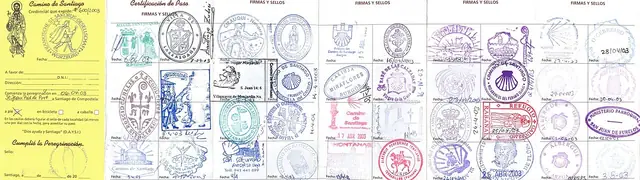
The pilgrim passport where you collect stamps. You get it from Camino associations or at the start of your route. See the pilgrim passport and the Compostela.
What do I need for the Compostela?
Walk at least the last 100 km (200 by bike) with your stamped credential: two stamps a day in that stretch.
Do I need to book albergues?
Public albergues usually work first come, first served. Private ones can be booked, and in high season, especially from Sarria, booking is wise.
When is the best time to walk the Camino?
Spring (April to June) and autumn (September and October). Summer is hot and busy; winter has short days and closed albergues.
What should I pack?
As little as possible: no more than 10% of your body weight. See the Camino packing list.
Is it safe to walk the Camino alone?
Generally yes: it is busy and calm. Take normal travel precautions, keep your phone charged and remember 112.
Do I need to be fit?
You don’t need to be an athlete, but training with a backpack for a few weeks helps a lot. Walking several days in a row is the real challenge.
What if I get injured?
Most larger villages have a pharmacy and a health centre; for emergencies, 112. For common problems (blisters, tendinitis, sprains, heat) read our Camino first aid guide; PeregriNeo carries that help on your phone, offline.
Is there phone signal on the Camino?
Mostly yes, but there are rural and mountain stretches without data. Download an offline map: PeregriNeo’s, with albergues, fountains and pharmacies, works with no signal.
What app should I use?
It depends on what you need. We compare the most popular in the best Camino apps. PeregriNeo, ours, gives you a day-by-day plan with your bookings, an offline map and a link for your family to follow you with nothing to install.
Do I need to speak Spanish?
No, but a few words help a lot. “Buen Camino” is the universal greeting.
Is the Camino only for religious people?
No. People walk it for many reasons; everyone is welcome.
When is the next Holy Year?
2027, because 25 July (St James’s day) falls on a Sunday. Expect more pilgrims.
Can I walk the Camino with my dog or by bike?
Yes to both, with some planning: many albergues don’t accept dogs, and cyclists need 200 km for the Compostela.