Planning your Camino
Camino de Santiago packing list
The lighter, the better: a complete Camino packing list with backpack weight, footwear, clothes, sleeping gear, first-aid kit and documents, plus what almost everyone ends up sending home.
In this guide
The golden rule of the Camino: your backpack should weigh no more than 10% of your body weight, water included. Every extra kilo is felt on every hill. This list is enough for spring, summer or autumn; for winter, add warm layers.
The backpack
- 30 to 40 litres is plenty. Bigger only tempts you to fill it.
- A good hip belt carries the weight on your hips, not your shoulders.
- A rain cover or a liner bag inside.
Footwear
- Walking shoes or trail runners you have already broken in. Never new shoes on the Camino.
- Half a size bigger than usual: feet swell after days of walking.
- Sandals or light flip-flops for the evening and the shower.
- 2–3 pairs of technical, seamless socks.
Clothes
- 2 quick-dry T-shirts and 1 long-sleeved top.
- 1 pair of walking trousers (zip-off ones are handy) and 1 pair of shorts or leggings.
- 1 fleece or light warm layer.
- 1 waterproof jacket or poncho.
- 2–3 sets of underwear.
- A cap or hat and sunglasses.
Wash clothes every afternoon: they dry overnight.
Sleeping
- A light sleeping bag or a sleeping bag liner in summer. Most albergues have blankets; some don’t.
- Earplugs and an eye mask: dormitories are noisy.
- A quick-dry towel.
Toiletries and first aid
- Travel-size toiletries, sun cream and lip balm.
- Blister plasters (hydrocolloid), a sterile needle, antiseptic, gauze, tape and anti-chafing cream.
- Your usual medication and a basic painkiller.
- A few clothes pegs and safety pins.
More in first aid on the Camino.
Documents and tech
- ID or passport, the European Health Insurance Card if you are from the EU, travel insurance if not.
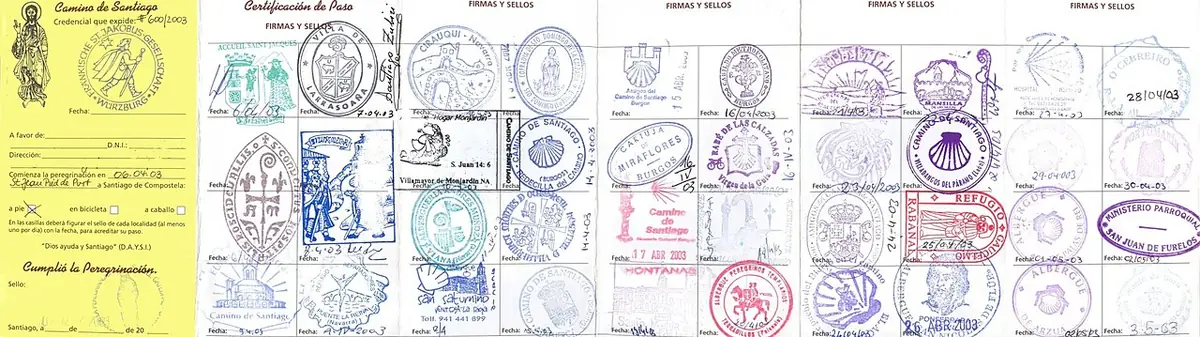
- The pilgrim passport (credential).
- Card and some cash.
- Phone, charger and a small power bank.
For your phone, choose one or two apps and test them at home: we compare the most popular in the best Camino apps. PeregriNeo has an offline map and a Help section that also works with no signal, with a first-aid kit checklist and what to do about blisters, chafing or a sprain.
Water and food
A 1–1.5 litre bottle or bladder, more in summer and on stretches without fountains. A few snacks (nuts, fruit, chocolate) for the gaps between villages.
Walking poles: yes or no?
Optional, but they help a lot on descents and take weight off your knees. If you fly with hand luggage only, you may not be allowed to carry them in the cabin: buy them in your starting town.
What almost everyone sends home
Too many clothes, a full-size towel, a laptop, books, a big first-aid kit, jeans and “just in case” items. Pharmacies and shops are everywhere on the main routes.
FAQ
How heavy should my backpack be for the Camino?
No more than 10% of your body weight, including water. 6–8 kg is a good target for most people.
Do I need a sleeping bag on the Camino?
A light one or a liner is recommended. Some albergues provide blankets, but not all.
What shoes are best for the Camino?
Broken-in walking shoes or trail runners, half a size bigger than usual. Boots only if you prefer them and are used to them.
Do I need walking poles?
They are not essential, but they help on descents and on long days.