On the Camino
First aid and common problems on the Camino: complete guide
The most common problems on the Camino and what to do about each one: blisters, chafing, tendinitis, sprains, heat, cold, sunburn, ticks, wounds, dogs and getting lost. And when to call 112.
In this guide
Almost every pilgrim has some mishap on the Camino, and it is almost always small: a blister, chafing, a grumbling knee. Knowing what to do on the spot keeps small things small.
The guides, one by one
Each problem has its own guide, with why it happens, how to avoid it, what to do step by step and when to get help:
- Blisters
- Tendinitis and knee pain
- Sprained ankle
- Heat and heatstroke
- Emergencies: when and how to call 112
- Before you go: first-aid kit, shoes and socks and the packing list
Here is the summary of everything.
The pilgrim’s first-aid kit
- Blister plasters (hydrocolloid), plasters and paper tape.
- A sterile needle, single-dose antiseptic, gauze and an elastic bandage.
- Anti-chafing cream or petroleum jelly; sun cream and lip balm.
- A painkiller or anti-inflammatory you already take (ask your doctor if unsure).
- Fine tweezers for ticks and splinters, small scissors.
- Your own medication with its prescription, and the European Health Insurance Card if you are from the EU.
Blisters
Prevent them with broken-in shoes, seamless technical socks, dry feet (change socks at midday if you sweat) and cream on friction points. As soon as you feel a hot spot, stop and protect it.
If you have one: small and not painful, leave it closed and cover it. Large and tense, it is usually drained: disinfect, prick at the edge with a sterile needle, let the fluid out without removing the skin, and cover. Redness, heat, pus or a red line spreading mean infection: pharmacy or health centre.
Chafing
Between the thighs, under the arms or where the backpack rubs. Seamless clothes and anti-chafing cream in the morning; if it happens, wash, dry well and protect. Adjust your backpack straps.
Tendinitis and knee pain
Shin tendinitis and knee pain on descents are very common in the first weeks.
- Slow down and shorten your stages for a few days: it helps most.
- Cold on the area for a few minutes, several times a day, protecting the skin.
- Walking poles on descents.
- Check your laces are not too tight over the instep.
- If it doesn’t improve with rest, or there is strong pain or swelling, see a professional.
Sprained ankle
If you can put weight on it with moderate pain, it is usually mild. In the first hours follow RICE: rest, ice (wrapped, never directly, about 15 minutes), compression with an elastic bandage that is not too tight, and elevation. A well-applied functional taping can help with a mild sprain, ideally done by someone who knows how. If you cannot bear weight, the ankle looks deformed or swells a lot quickly, stop walking and get help.
Heat and heatstroke
Heat is the Camino’s biggest risk in summer, especially on the Meseta and the Vía de la Plata. Start very early, drink often, eat something salty, wear a cap and light clothes.
Warning signs: bad headache, dizziness, nausea, very hot skin, confusion or no longer sweating. Stop in the shade, remove weight and clothing, cool the body with water and sip water if conscious. If there is confusion, fainting or no quick improvement, call 112.
Dehydration
Dry mouth, little dark urine, unusual tiredness or cramps. Drink little and often and replace salts (oral rehydration sachets from a pharmacy). Fill up at every fountain and know where the next one is.
Cold, rain and hypothermia
On mountain passes the weather changes fast even in spring. Wear layers, change out of wet clothes as soon as you can and eat. Uncontrolled shivering, clumsiness, confusion or drowsiness may be hypothermia: get under cover, dry clothes, warmth, a hot drink if conscious, and 112.
Sunburn
Walking west, the sun hits the back of your neck in the morning and your left side at midday. Reapply sun cream, wear a cap that covers your neck and thin long sleeves.
Ticks
In meadows, woods and long grass, especially in spring and summer. Check your skin every evening. Remove a tick as soon as possible with fine tweezers, as close to the skin as you can, pulling straight and slowly, without twisting or squeezing. No oil, alcohol or flames. Disinfect and note the date: if you get a fever or a spreading red patch in the following weeks, see a doctor and mention the tick.
Wounds and bleeding
Clean with clean water, disinfect and cover. For bleeding, apply firm direct pressure with gauze or a clean cloth for several minutes without lifting to look. A tourniquet is only for severe bleeding from an arm or leg that does not stop with direct pressure, while waiting for help. For any serious bleeding, 112 straight away.
Dogs
Loose dogs are common in villages; they nearly always just bark. Don’t run, don’t stare, talk calmly, keep walking slowly and, if needed, put your pole or backpack between you and the dog. If bitten, wash the wound well with soap and water and go to a health centre.
Getting lost or running out of battery
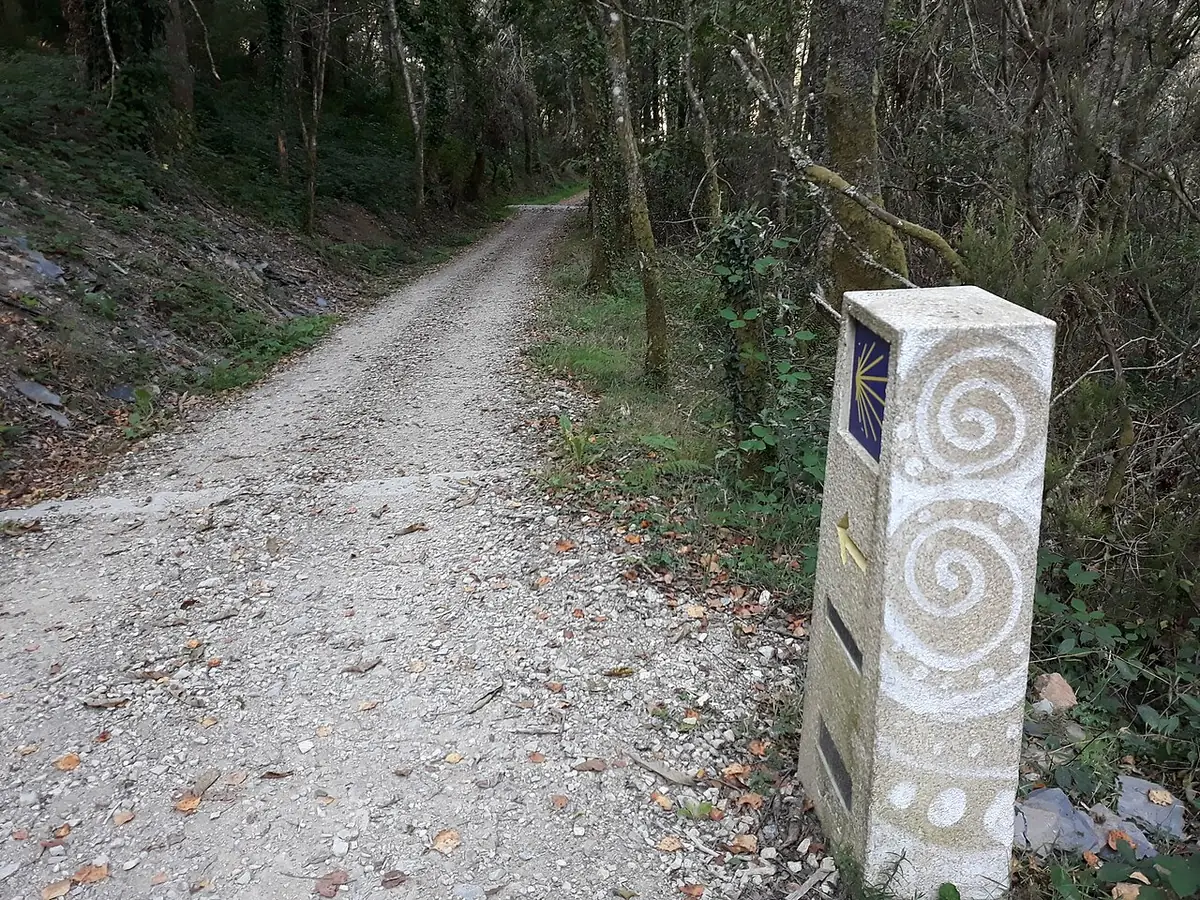
If you haven’t seen an arrow for a while, go back to the last one. Ask in the nearest village. Carry a power bank, use battery-saving mode and keep an offline map. And tell someone where you are walking.
When to call 112
- Chest pain, difficulty breathing or loss of consciousness.
- Confusion, fainting, signs of heatstroke or hypothermia.
- Bleeding that won’t stop.
- A fall with severe pain, a suspected fracture or a head injury.
- Someone who cannot go on in an isolated place.
Say what happened and where you are: nearest village, stage and, if possible, your coordinates.
FAQ
What is the emergency number on the Camino?
112, in Spain, Portugal and France. Free, works without credit, multilingual.
Should I pop my blisters?
Small ones, better not. Large, tense ones are usually drained at the edge with a sterile needle, keeping the skin, and covered. If there are signs of infection, see a pharmacist or doctor.
Can I see a doctor on the Camino as a foreigner?
Yes, health centres see pilgrims. EU citizens should bring the European Health Insurance Card; others should have travel insurance.
How do I remove a tick?
With fine tweezers, close to the skin, pulling straight and slowly. Disinfect and watch the area for a few weeks.